

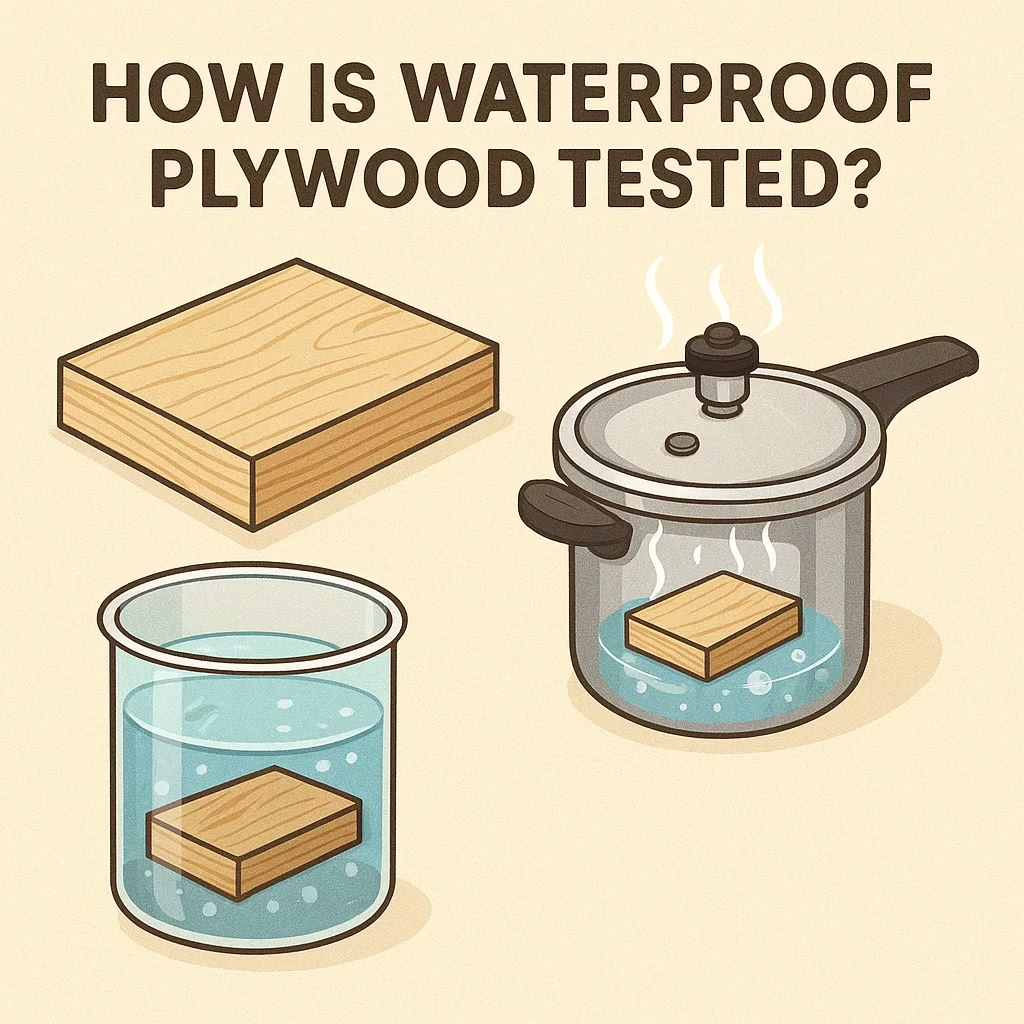
When buying plywood, one of the most important factors to check is its resistance to water and moisture. Plywood is used in kitchens, bathrooms, outdoor furniture, and construction—places where it often faces water and humidity. That’s why manufacturers and customers alike rely on standardized tests to ensure the quality.
In this blog, we’ll cover the common tests used in the plywood industry, and also share a few quick checks you can do at home to get a fair idea of the quality.
1. Standard Industry Tests
a) Boiling Waterproof (BWP) Test
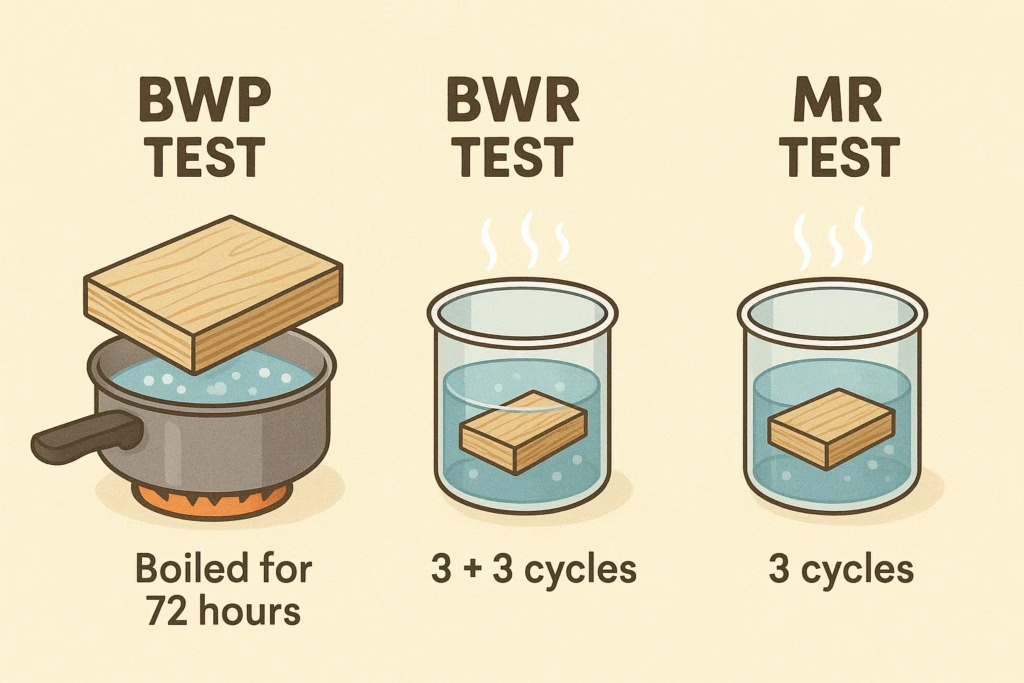
- For BWP plywood, the sample pieces are boiled in water for 72 hours straight. This can be done all at once, or broken into smaller boiling sessions, as long as the pieces are kept in cold water in between.
- After the boiling is done, the pieces are quickly cooled down by dipping them in cold water. While they’re still wet, they are tested for strength and bonding as per IS standards.
- If the plywood stays intact without delaminating, it passes as Boiling Waterproof.
Where it’s used: Kitchens, bathrooms, and outdoor furniture.
b) Boiling Water Resistant (BWR) Test
- BWR grade is also water-resistant but slightly less durable than BWP.
- For BWR plywood, the test pieces are boiled in water for 8 hours, then dried in an oven at about 65°C for 16 hours.
- This makes one full cycle. The same cycle is repeated two more times, so the plywood goes through three rounds of boiling and drying.
- After these cycles, the samples are checked for strength and bonding as per IS standards. If the layers stay firm, the plywood qualifies as Boiling Water Resistant.
Where it’s used: Interior furniture, partitions, and semi-wet areas.
c) Moisture Resistant (MR) Test
- MR (often called “Commercial Plywood”) is not truly waterproof but can resist humidity.
- For MR plywood, the samples are soaked in warm water at about 60°C for 3 hours, then dried in an oven at about 65°Cfor 8 hours.
- This makes one cycle. The process is repeated two more times, so the plywood goes through three rounds of soaking and drying.
- After the cycles, the pieces are tested for strength and bonding. If the plywood doesn’t swell or separate, it passes as Moisture Resistant.
Where it’s used: Living room and bedroom furniture in dry conditions.
d) Pressure Cooker Test (Quick Lab Test)
- An accelerated test used by many manufacturers.
- A plywood sample is placed inside a household pressure cooker filled with water.
- The cooker is run for 2 to 3 whistles (roughly equivalent to boiling under higher pressure for ~10–15 minutes).
- If the sample survives without delamination, the plywood has good bonding strength and water resistance.
The test is not very accurate but is often used as a quick indicator of whether the resin and bonding are strong.
2. Quick Checks a Customer Can Do at Home
Not every customer can run industrial tests, but here are some simple checks before buying plywood:
✅ Water Soak Test – Take a small piece of plywood and soak it in a bucket of water for 24–48 hours.
- If it swells or layers peel, it is low quality.
- Good MR plywood will survive at least 24 hours, while BWR/BWP will last much longer.
✅ Pressure Cooker Test – As explained above, try it on a small cut piece. This is a surprisingly effective way to compare brands.
✅ Edge Inspection – Look at the edge of the plywood sheet. Uniform, tightly packed layers indicate good bonding. Gaps, overlaps, or excess filler suggest poor quality.
✅ Tap Test – Tap on the surface. A hollow sound may indicate gaps or poor pressing.
✅ Scratch & Smell Test – BWP/BWR plywood bonded with phenolic resin usually has a darker color and a sharp phenolic smell. MR plywood bonded with urea resin may appear lighter and have a mild smell.
3. Why These Tests Matter
- Durability: Properly tested plywood lasts longer in wet areas.
- Value for Money: Cheap, untested plywood may fail quickly, leading to replacement costs.
- Peace of Mind: A little testing goes a long way in ensuring your furniture or construction project remains strong.
Final Word
Choosing the right plywood means understanding the difference between MR, BWR, and BWP grades and ensuring they pass the right tests. While manufacturers like us at Deepak Lamination follow ISI standards, customers can still perform quick checks like the water soak test or pressure cooker test for extra confidence.
With the right plywood, your furniture and interiors won’t just look good—they’ll stay strong for years.